
Hey there, fellow wellness seekers! I am beyond excited to welcome you to this incredible journey of embracing wellness through the beautiful practice of yoga. Whether you’re a complete newbie to yoga or getting back into the groove after a little hiatus, this guide is tailor-made for you.
Embracing Wellness Through Yoga: A Journey for Beginners
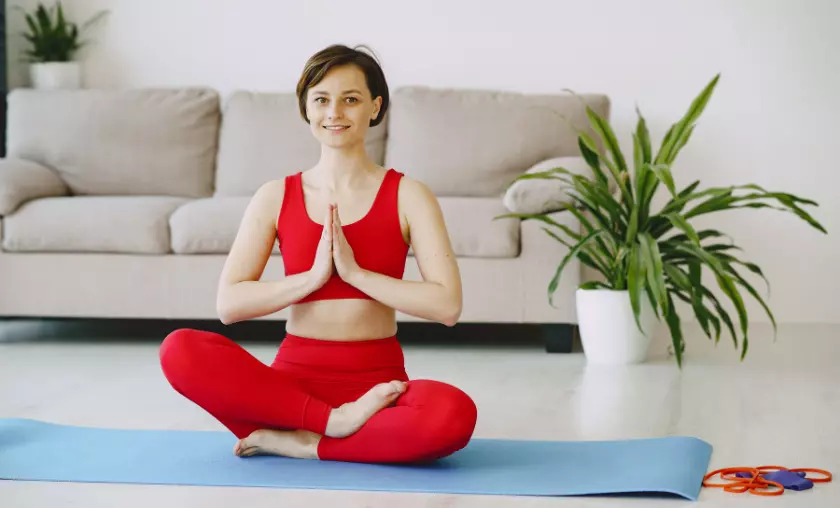
Life can be quite the rollercoaster; let’s face it, we all yearn for that oasis of calm amidst the chaos. That’s where yoga steps in – like a trusted friend always ready to wrap you in a warm, soothing embrace. This ancient practice isn’t just about bending and twisting your body into intriguing shapes; it’s about holistically nurturing your mind, body, and soul.
You step onto your mat, take a deep breath, and as you flow through those poses, you embark on a journey to rediscover your inner Balance, strength, and peace. It’s not about contorting yourself into a human pretzel (trust me, I’ve been there); it’s about finding your own rhythm, embracing your unique journey, and reaping yoga’s incredible benefits.
The Promise of Yoga Poses for Beginners
Before we dive headfirst into those oh-so-inviting poses, let’s talk about why yoga is an absolute game-changer, especially for those just stepping onto the mat.
Mind-Body Harmony: Finding Your Zen Zone
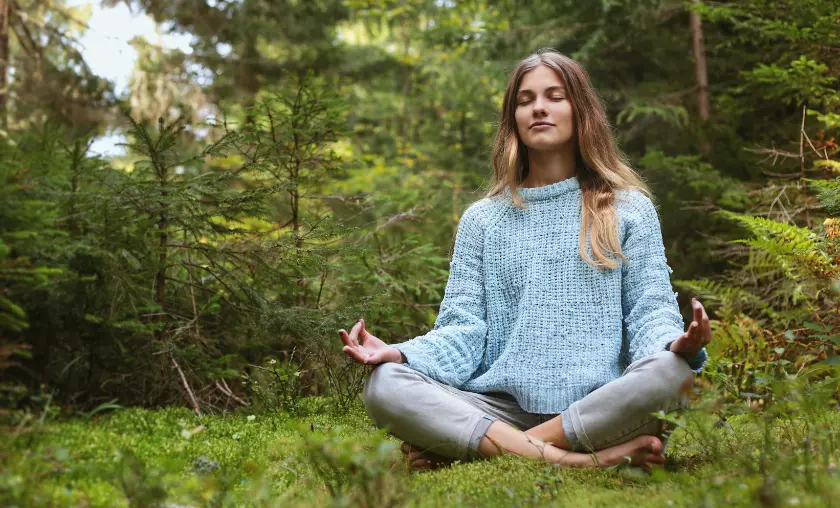
Have you ever felt that disconnect between what your mind wants and what your body needs? Well, my friend, yoga is here to bridge that gap. You’ll experience a newfound harmony between your thoughts and your physical being through mindful movement, deliberate breathing, and moments of stillness. It’s like hitting the reset button on the constant whirlwind of life.
From Stiff to Supple: The Flexibility and Strength Connection
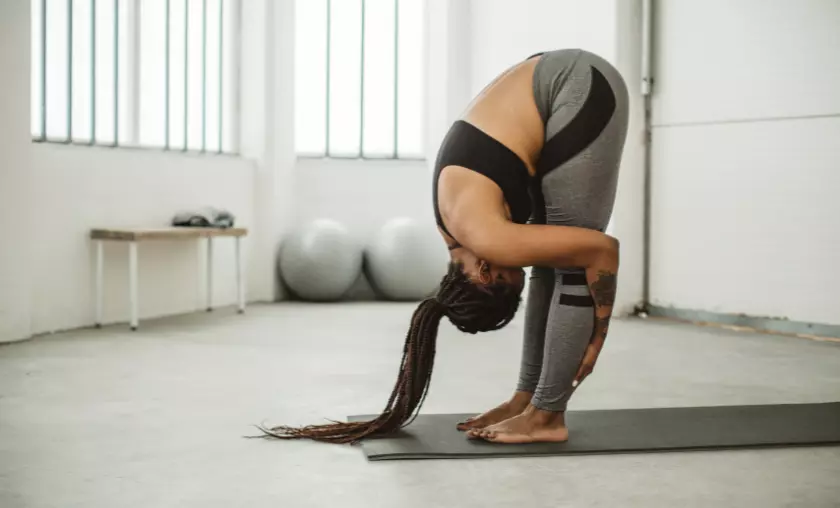
Ah, flexibility – the word that might have made you cringe at the mere thought of touching your toes. But fear not, for yoga is your guide to transforming that stiffness into fluidity. And guess what? As you stretch those muscles and ease into poses, you’re also building a foundation of strength. It’s a win-win situation that’ll make you feel like the superhero of your wellness journey.
Preparing for Your Yoga Odyssey
Yoga Poses for BeginnersBut hold your horses, dear beginner. Before you channel your inner yoga guru, there are a few things to consider to make this journey even more remarkable.
Creating Your Serene Sanctuary
Imagine practicing yoga in a cluttered, noisy space – not exactly the serene atmosphere you aim for, right? Designate a spot to unroll your mat and immerse yourself in tranquility. Whether it’s a corner of your living room or a peaceful patch in your garden, this space will be your sanctuary, your haven of calmness.
Essential Yoga Gear for Every Beginner

Now, let’s talk gear – but don’t worry, we’re not going all out on a shopping spree. You only need a few basics to make your practice comfortable and enjoyable. A yoga mat that supports your joints, some comfy clothes that allow you to move freely, and props like blocks and straps to assist you in those poses that might initially feel tricky.
Are you ready, my fellow seekers? It’s time to delve into the heart of this journey – the yoga poses themselves. In the next part of this guide, we’ll explore 10 easy yet immensely powerful poses perfect for beginners like you. Each pose comes with its own benefits, and together, they’ll form the foundation of your yoga practice.
So, roll out your mat, grab your water bottle (hydration is key!), and dive into the incredible world of yoga poses that will kickstart your wellness journey and leave you craving more of that mindful movement and inner peace. Stay tuned for the next chapter, where we’ll explore the first five poses that will set you on the path of yoga bliss!
10 Easy Yoga Poses for Beginners
Hey there, lovely souls! It’s your yoga enthusiast and wellness buddy, back with another exciting chapter in our journey to embrace wellness through yoga. Are you ready to delve into the world of poses? I know I am, and I can’t wait to guide you through the magical journey of yoga, one pose at a time.
Mountain Pose (Tadasana)
Yoga Poses for BeginnersToday, we’re kicking off our pose journey with a classic – the Mountain Pose, also known as Tadasana. Now, you might be thinking, “isn’t standing just, well, standing?” But my friend, let me tell you, there’s so much more to it than meets the eye.
Grounding Yourself: Finding Stability in Mountain Pose
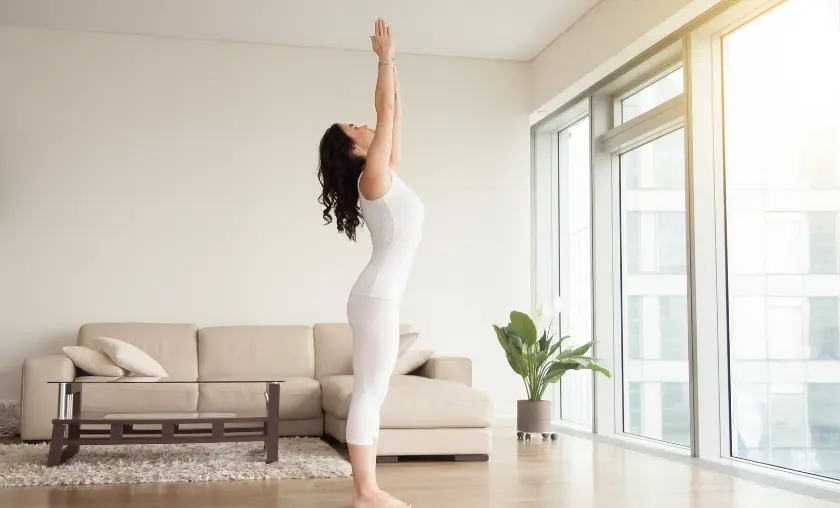
Imagine standing tall like a majestic mountain – unwavering, rooted, and connected to the earth. That’s the essence of Tadasana. This pose might seem simple, but it’s a powerhouse of grounding energy. As beginners, it’s crucial to establish a strong foundation, and that’s precisely what Mountain Pose offers.
When you stand in Tadasana, you invite a sense of stability into your practice and life. It’s like planting your feet firmly on the ground and saying, “I am here and ready to embrace whatever comes my way.” This grounding quality is physical and metaphorical – reminding us to stay present and anchored amidst the waves of life.
To practice Mountain Pose:
The Power of Alignment: Perfecting Your Posture
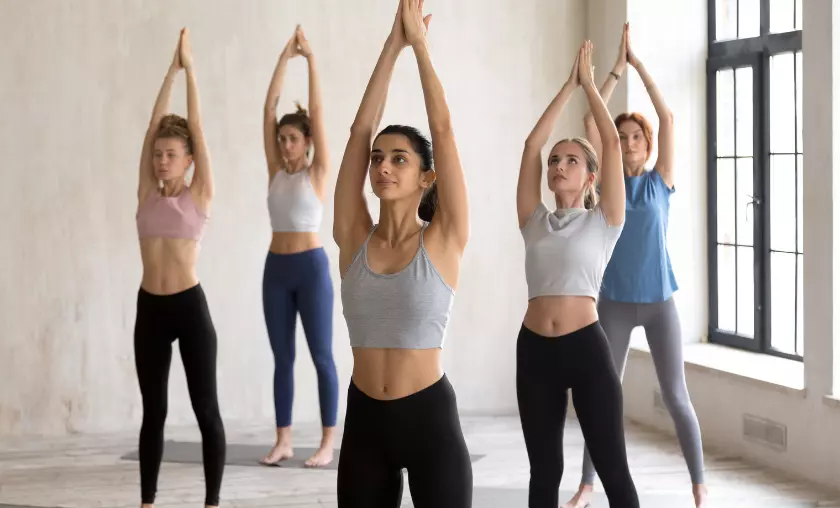
Ah, posture – the unsung hero of a confident and healthy presence. Mountain Pose is like your posture coach, gently nudging you toward alignment perfection. As you stand tall, you’ll notice that your body naturally finds its equilibrium. Your spine lengthens, your shoulders relax, and your neck finds a comfortable, neutral position.
But it’s not just about looking good; it’s about feeling good from the inside out. When you align your body in Mountain Pose, you create space for energy to flow freely. It’s like removing the roadblocks and letting vitality surge through your veins. Plus, this alignment carries over into other poses, preventing injuries and ensuring a smooth practice.
Remember, my fellow beginners, awareness is the key to perfecting your posture in Tadasana. Take a moment to check in with your body. Are you distributing your weight evenly between your feet? Is your spine straight but not rigid? Are your shoulders relaxed? With each practice, you’ll refine this awareness and carry it into your daily life, reaping the benefits of improved posture beyond the mat.
As we wrap up our exploration of the Mountain Pose, I encourage you to embrace its simplicity with an open heart. Tadasana teaches us that the most profound transformations sometimes start with straightforward steps. The stability and alignment you cultivate in this pose will become the bedrock of your yoga journey, preparing you for the exciting poses that await us in the coming chapters.
Child’s Pose (Balasana)
Yoga Poses for BeginnersHere we ready to guide you through the next stop on our wellness journey: the wonderfully restorative Child’s Pose, also known as Balasana. After grounding ourselves with Mountain Pose, it’s time to melt into the mat and experience the profound surrender and release this pose offers.
Relaxation in Motion: Exploring Comfort in Child’s Pose
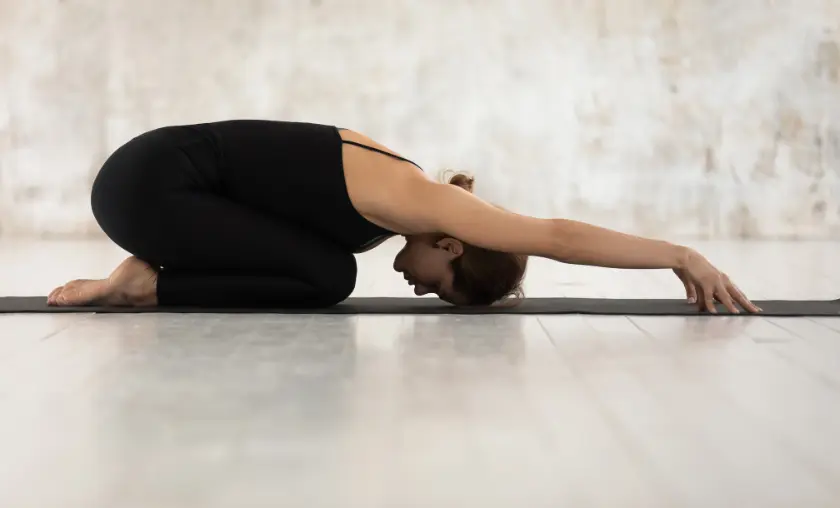
You’re gently folding your body forward, your forehead touching the mat, and your arms extended in front of you. That, my friends, is the essence of Child’s Pose. It’s like wrapping yourself in a cozy blanket of tranquility. This pose invites you to let go of tension, worries, and the constant chatter in your mind.
As beginners, we often approach yoga with goals in mind – to build strength, increase flexibility, and find inner peace. But knowing when to pause, breathe, and be is equally important. Balasana is your permission slip to do just that. It’s a moment of respite, a sanctuary of stillness where you can recharge and reconnect with yourself.
To practice Child’s Pose:
Restoring Energy: How Child’s Pose Eases Fatigue

In our fast-paced lives, fatigue often becomes a constant companion. We push ourselves to meet deadlines, tackle to-do lists, and fulfill responsibilities while neglecting the essential need for rest. That’s where Child’s Pose swoops in as your fatigue-fighting superhero.
When you settle into Balasana, you’re giving your body the chance to rejuvenate. It’s like hitting the reset button. As you bow forward, you’re gently massaging your internal organs, which stimulates circulation and aids in digestion. This gentle compression also helps soothe the nervous system, leading to calm and relaxation.
What’s truly magical about Child’s Pose is its ability to restore energy. It might seem counterintuitive – after all, you’re not precisely leaping around in a dynamic flow. But you recharge your batteries in this quiet, reflective space. Think of it as refilling your cup so you’re ready to tackle whatever life throws your way.
As you embrace Child’s Pose, my fellow seekers, let yourself surrender to the moment. Feel the mat supporting you, the gentle rhythm of your breath, and the stillness that envelops you. It’s a practice of self-care, a reminder that it’s okay to pause and honor your well-being.
Downward-Facing Dog (Adho Mukha Svanasana)
Yoga Poses for BeginnersDownward-Facing Dog (Adho Mukha Svanasana)
We’ve stood tall in Mountain Pose and surrendered to the serenity of Child’s Pose. Now, get ready to explore a pose that’s both dynamic and calming – the iconic Downward-Facing Dog, also known as Adho Mukha Svanasana.
Stretch it Out: Unleashing Tension in Downward Dog
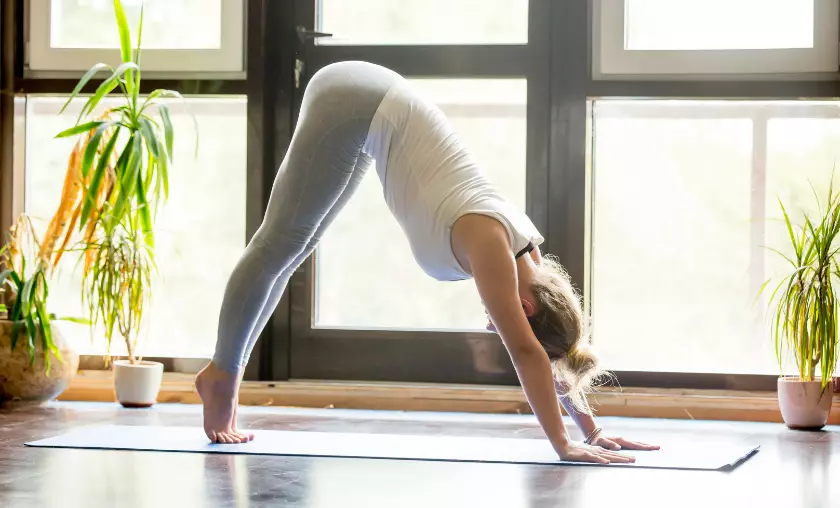
Have you ever observed a dog waking up from a nap? They gracefully stretch their bodies, elongating their spines and flexing their muscles – that’s where the essence of Downward-Facing Dog lies. This pose is like a full-body stretch, a chance to release any tension that’s taken up residence in your muscles.
As a beginner, this pose is quite an adventure. From your hands and feet forming a triangle to your hips pointing upward, it’s a unique combination of a forward bend and an inversion. But fear not! This pose is a delightful blend of strength-building and tension-releasing, making it a fantastic addition to your yoga toolkit.
To practice Downward-Facing Dog:
Calm Amidst Chaos: Using Downward Dog to Relieve Stress
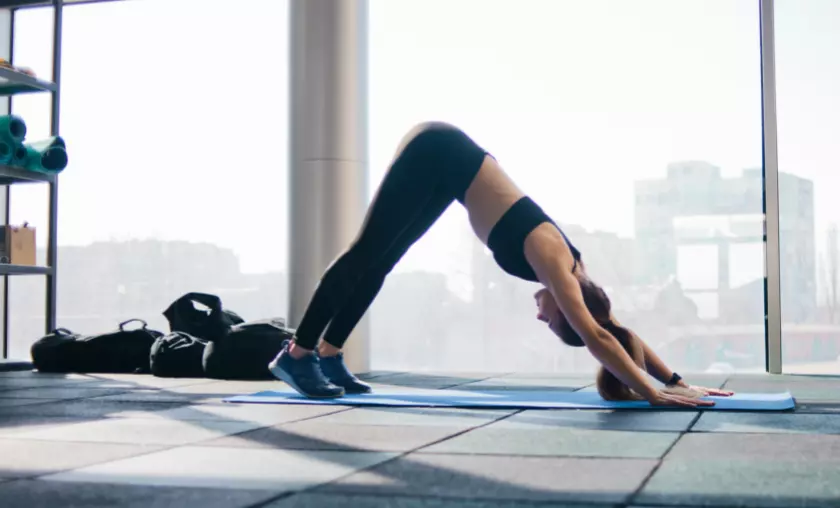
During our hectic lives, Stress can creep in like an uninvited guest. It tightens your shoulders, knots your neck, and leaves you feeling like you’re carrying the world’s weight. This is where the magic of Downward-Facing Dog comes into play.
As you settle into this pose, you’ll notice something incredible happening – you’re creating a safe haven of calm during chaos. The gentle inversion encourages blood flow to your brain, which can help alleviate stress and improve focus. Your spine stretches, releasing tension and allowing your muscles to relax. With every breath, you’re sending a soothing message to your nervous system: “All is well.”
But that’s not all – Downward Dog is also a powerhouse for building strength. It targets your shoulders, arms, core, and legs, helping you cultivate a strong foundation for more advanced poses. Holding this pose will make you feel the beautiful dance between effort and surrender. It’s a metaphor for life – the push and pull, the ebb and flow.
As you explore Downward Dog, my fellow seekers, embrace the journey. Your heels might not touch the ground, your heels might not touch the ground, and your body might not ideally mimic the pictures you’ve seen. But guess what? That’s absolutely okay. Your practice is unique, and your body is your guide. With each breath, you create space for growth, discovery, and a deeper connection with yourself.
Cobra Pose (Bhujangasana)
Yoga Poses for BeginnersWe’ve grounded ourselves in Mountain Pose, surrendered to the serenity of Child’s Pose, and stretched our way through Downward-Facing Dog. Now, experience the empowering and heart-opening Cobra Pose, Bhujangasana.
Unlocking the Heart: The Heartwarming Benefits of Cobra Pose

Like a cobra gracefully rises from the ground, Cobra Pose invites you to lift your chest and heart toward the sky. It’s a heart-opening pose that benefits your physical body and resonates with the deeper layers of your being. This pose encourages you to be vulnerable, to open yourself up to new experiences, and to embrace the world with an open heart.
As a beginner, Cobra Pose is a gentle backbend that offers a delightful stretch. But it’s also an invitation to explore the connection between your heart center and your back muscles. Bhujangasana teaches you to find strength in vulnerability – to rise up even when life tries to weigh you down.
To practice Cobra Pose:
Strengthening the Back: Building Resilience Through Backbends
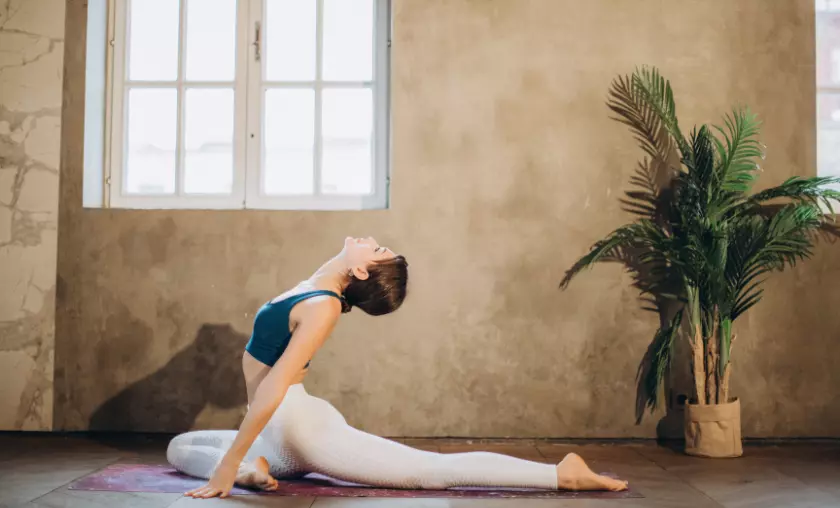
In our sedentary modern lives, we often find ourselves hunched over desks, screens, and phones. This can lead to discomfort, stiffness, and even pain in the back and shoulders. Cobra Pose is like a rejuvenating tonic for your spine – it counteracts the effects of constant forward bending and encourages flexibility.
You gently stretch and strengthen your back muscles as you lift your chest in Cobra Pose. It’s like giving your spine a wake-up call, reminding it of its natural ability to arch and extend. With regular practice, you’ll notice improved posture, reduced tension, and increased mobility in your spine.
However, the benefits extend beyond the physical realm. Backbends like Cobra Pose stimulate the heart chakra, which is associated with compassion, love, and emotional Balance. As you open your heart in Bhujangasana, you’re also inviting an emotional release, letting go of what no longer serves you and making space for positive energy to flow.
Warrior I (Virabhadrasana I)
Yoga Poses for BeginnersHere’s Dedicated guide on this incredible journey through the world of yoga poses. We’ve grounded ourselves in Mountain Pose, surrendered to the serenity of Child’s Pose, stretched our way through Downward-Facing Dog, and opened our hearts in Cobra Pose. Now, it’s time to tap into your inner strength and embrace the empowering Warrior I pose, also known as Virabhadrasana I.
Empowerment Through Strength: The Warrior Within
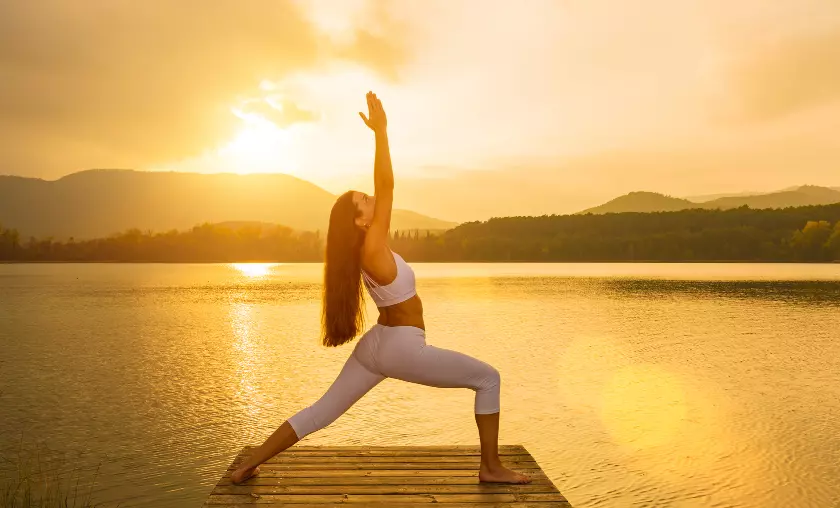
Imagine standing tall and strong, gazing fearlessly ahead, and feeling a surge of power coursing through your veins. That’s the essence of Warrior I. This pose is a tribute to your inner Warrior – the part of you that’s unshakeable, determined, and ready to conquer life’s challenges with grace and courage.
As a beginner, Warrior I might like a leap into the unknown. You’re lunging forward, your arms reaching the sky, and your gaze focused ahead. It’s a powerful combination of strength and grace, a reminder that you can overcome obstacles on and off the mat.
To practice Warrior I:
Finding Focus: Channeling Concentration During Warrior Poses
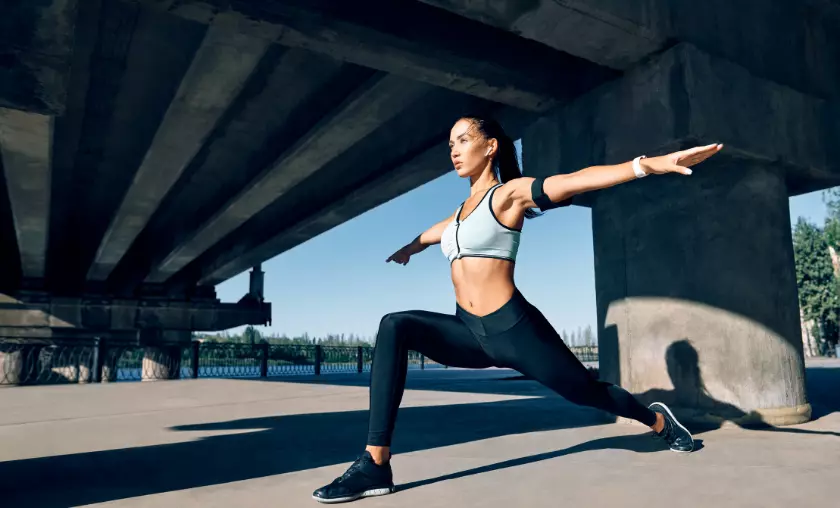
Finding focus can sometimes feel like chasing a fleeting butterfly in a world buzzing with distractions. Warrior I is your opportunity to cultivate concentration and mindfulness. As you hold this pose, your gaze fixed on a point ahead, you’re training your mind to stay present despite any external chaos.
Grounding your feet and anchoring your body in Warrior I symbolizes your commitment to being fully present in this moment. It’s a meditation in motion – a practice of mindfulness that extends beyond the mat. With each breath, you strengthen your physical body and nurture your mental resilience.
Warrior I is not just about the external display of strength; it’s about harnessing the power within. The pose teaches you that strength isn’t solely about physical muscles but tapping into your inner reserves of determination, courage, and confidence. Just like a warrior rising to a challenge, you grow to embrace your practice and your life with unwavering strength.
As you embody Warrior I, my fellow warriors, remember that the battle isn’t against yourself; it’s a battle for yourself. Each time you step into this pose, you reaffirm your commitment to well-being, growth, and empowerment.
Tree Pose (Vrikshasana)
Yoga Poses for BeginnersBack to continue our invigorating journey through the world of yoga poses. We’ve already grounded ourselves in Mountain Pose, surrendered to the serenity of Child’s Pose, stretched through Downward-Facing Dog, opened our hearts in Cobra Pose, and channeled our inner warriors in Warrior I. Now, let’s embark on a journey of Balance and growth with the graceful Tree Pose, also known as Vrikshasana.
Finding Balance: Rooted Serenity in Tree Pose
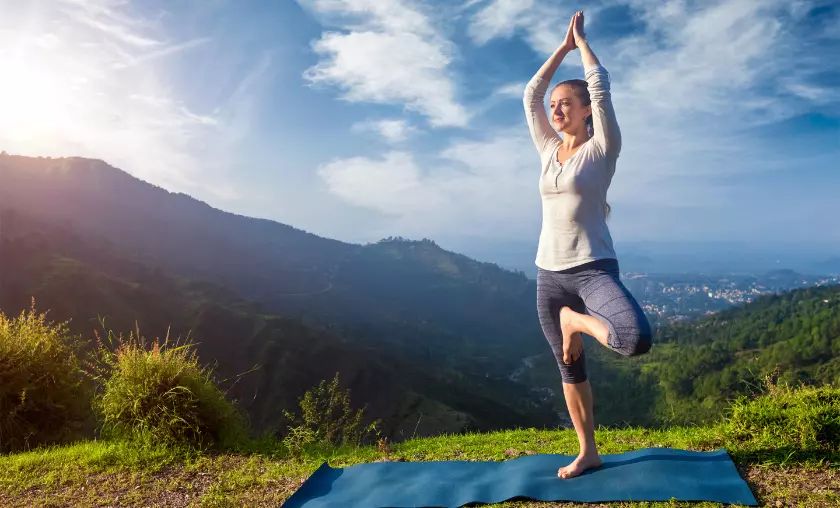
Imagine standing tall like a tree, your roots sinking into the earth, your branches reaching for the sky. This imagery captures the essence of Tree Pose. As you lift one leg and place the sole of your foot against your opposite inner thigh, you become a living embodiment of Balance – both grounded and reaching.
Tree Pose encourages you to find stillness in movement, like a tree swaying gently in the breeze. You might experience wobbles and adjustments as a beginner, but that’s all part of the process. This pose is an excellent teacher of patience and perseverance, reminding us that Balance isn’t about perfection but the journey toward equilibrium.
To practice Tree Pose:
Growth Inward and Upward: Embracing Balance
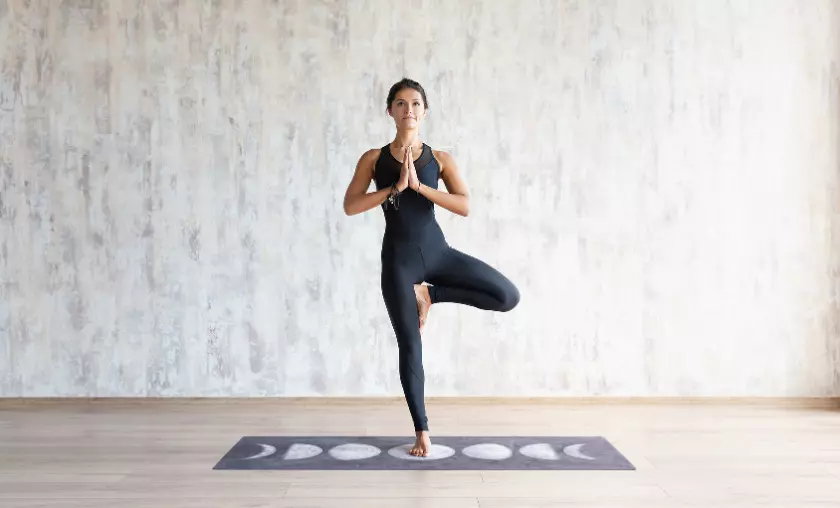
As you stand in Tree Pose, you’re practicing physical Balance and exploring the concept of Balance in your life. Trees teach us the wisdom of growth – grounding ourselves in the present moment while aspiring to reach new heights. Vrikshasana encourages you to embrace both your roots and your aspirations.
While your lifted leg represents growth and expansion, your standing leg symbolizes your foundation and roots. It’s a beautiful reminder that change isn’t just about reaching outward; it’s about growing inward, deepening your connection to yourself, your values, and your purpose.
Additionally, Tree Pose challenges you to maintain mental focus. Just like the leaves of a tree rustling in the wind, your mind might wander as you find your Balance. But through practice and mindfulness, you’ll develop the ability to stay present, even in moments of challenge.
As you gracefully embody Tree Pose, my fellow seekers, let the wisdom of trees inspire you. Embrace the journey of growth, both upward and inward. With each practice, you’re nurturing your inner roots and stretching your aspirations toward the sky. Remember that Balance is a lifelong dance; you’re already stepping onto the dance floor with courage and grace.
Cat-Cow Stretch (Marjaryasana/Bitilasana)
Yoga Poses for BeginnersYour dedicated guide on this enchanting voyage through the world of yoga poses. We’ve already explored the relaxation and strength of Bridge Pose, but now it’s time to embrace the soothing rhythm of the Cat-Cow Stretch, also known as Marjaryasana and Bitilasana.
Breath and Movement: The Harmony of Cat-Cow Stretch

Imagine your body moving like a graceful cat and a contented cow – that’s the essence of the Cat-Cow Stretch. This dynamic duo of poses allows you to flow with your breath, creating a gentle and rhythmic dance that massages your spine and energizes your body. As a beginner, you’ll discover that this flow is like a meditation in motion – a way to sync your breath and movement for a soothing experience.
Cat-Cow Stretch is a beautiful example of how yoga encourages a deeper connection between the breath and the body. It’s a moving meditation that invites you to be fully present, to let go of distractions, and to tune into the wisdom of your body’s natural rhythm. This pose sequence is a gentle reminder that every inhale and exhale is an opportunity for renewal.
To practice Cat-Cow Stretch:
Spinal Massage: The Healing Benefits of Cat-Cow
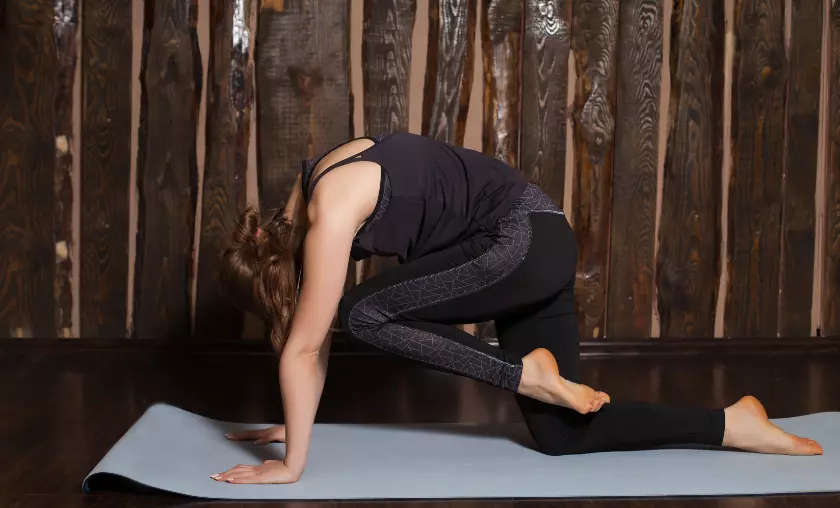
In our modern lives, where we spend hours sitting at desks or looking at screens, our spines can often bear the brunt of our sedentary habits. Cat-Cow Stretch is like a gentle massage for your spine, bringing flexibility and nourishment to each vertebra. It’s a way to counteract the stiffness accumulated from prolonged sitting.
The arching and rounding of your back in this flow create a delightful sensation of movement along your spine. This movement acts as a natural massage, releasing tension and promoting circulation in the spinal discs. As you flow through Cat-Cow Stretch, you’re encouraging a healthy range of motion in your spine, fostering a sense of vitality and well-being.
Beyond the physical benefits, Cat-Cow Stretch also has a calming effect on the nervous system. The synchronized flow with your breath activates the relaxation response, reducing Stress and promoting a sense of inner tranquility. It’s a perfect practice to weave into your daily routine, whether as a gentle morning wake-up or an evening wind-down.
As you gracefully transition between Cat and Cow Poses, my fellow seekers, let the rhythm of your breath be your guide. Allow this movement to be a form of self-care, a moment of mindfulness, and a reminder that your body is designed to move and flow. With each arch and round of your spine, you’re not just stretching but also inviting a sense of healing and renewal.
Seated Forward Bend (Paschimottanasana)
Yoga Poses for BeginnersGuide on this enchanting odyssey through the world of yoga poses. We’ve already explored the soothing flow of Cat-Cow Stretch, but now it’s time to embrace the serene introspection of the Seated Forward Bend, also known as Paschimottanasana.
Journey Inward: The Essence of Seated Forward Bend
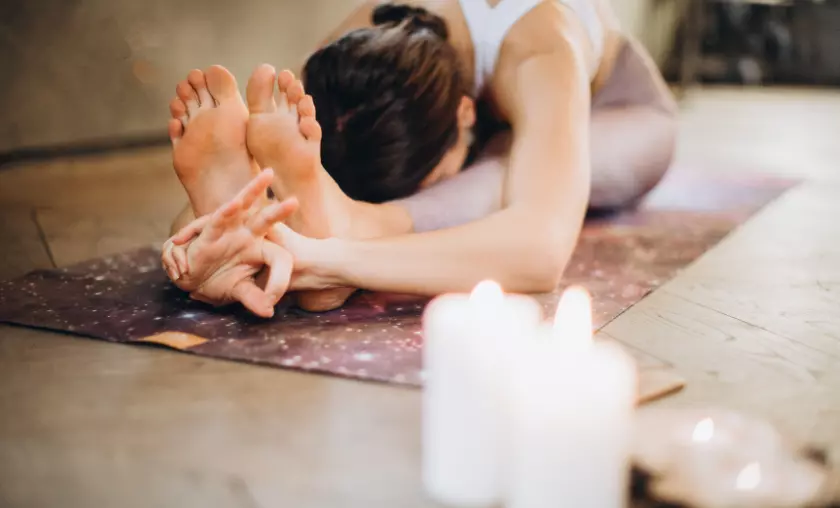
Imagine folding forward like a gentle book, allowing your body to surrender to the earth – that’s the essence of Seated Forward Bend. This pose is a journey inward, an opportunity to turn your focus from the external world to the sanctuary within. As a beginner, you’ll discover that this pose is a gentle invitation to release tension and find stillness amidst the whirlwind of life.
Paschimottanasana is a beautiful reminder that yoga is not just about dynamic movement; it’s also about cultivating inner awareness and mindfulness. This pose encourages you to let go of the need to perform and, instead, embrace the simplicity of being. It’s a moment to connect with your breath, your body, and your thoughts in a gentle and nurturing way.
To practice Seated Forward Bend:
Releasing Tension: The Healing Benefits of Forward Folding
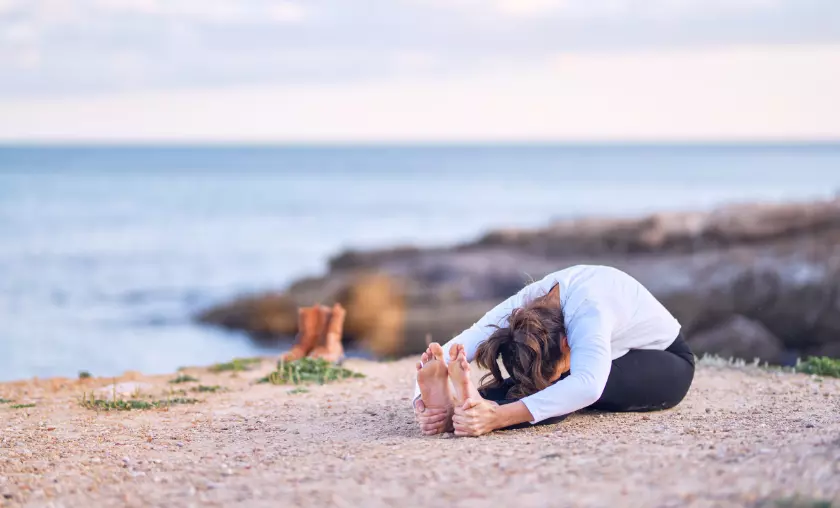
Our bodies often accumulate tension in a world filled with hustle and bustle, especially in the neck, shoulders, and lower back areas. Seated Forward Bend is like a gift you give to your body – a gentle way to release that accumulated tension and offer yourself a moment of respite.
As you fold forward in Paschimottanasana, you create a gentle compression in your abdomen, which can have a soothing effect on the digestive system. The stretch along the spine relieves the back muscles and promotes flexibility. And as you surrender into the pose, you’re signaling to your nervous system that it’s time to relax.
But the benefits of Seated Forward Bend extend beyond the physical. This pose has a calming effect on the mind, helping to reduce Stress and anxiety. It encourages introspection, allowing you to turn your attention inward and create a sacred space for reflection.
As you embrace Seated Forward Bend, my fellow seekers, remember that stillness is not a void to be filled; it’s a canvas for self-discovery. Let this pose be a sanctuary where you can unwind, let go, and reconnect with yourself. With each fold forward, you’re stretching your body and pushing your capacity for inner peace.
Corpse Pose (Savasana)
Yoga Poses for Beginners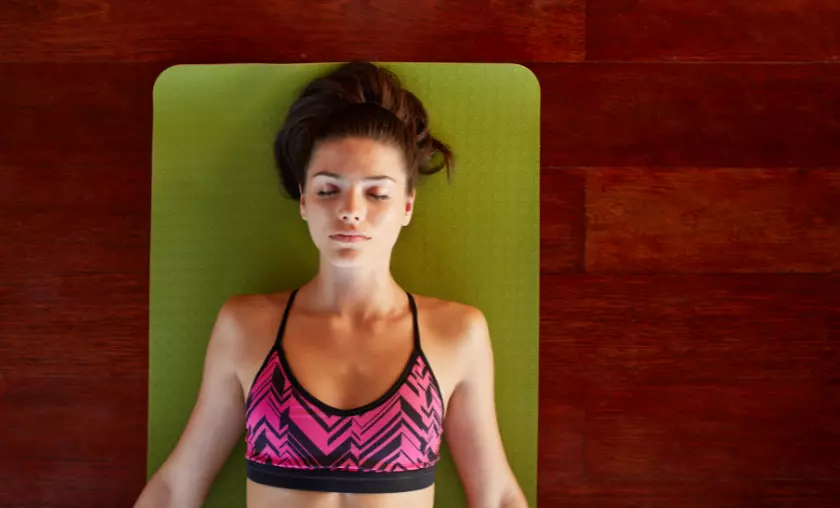
Imagine lying down in stillness, fully releasing every muscle, and surrendering to the present moment – that’s the essence of Corpse Pose. This asana is often called the “final relaxation” because it’s the culmination of your practice, allowing you to integrate the benefits of all the poses you’ve explored. As a beginner, you might initially see Savasana as simply lying down, but it’s so much more than that – it’s a gateway to deep relaxation and inner connection.
Savasana might seem simple, yet it’s one of the most challenging poses to master. It requires complete surrender – not just of your body, but of your thoughts as well. The art of Savasana lies in letting go of any effort, striving, and tension. It’s an invitation to be fully present in the moment, embracing stillness and silence.
Integration and Relaxation: The Profound Effects of Final Relaxation
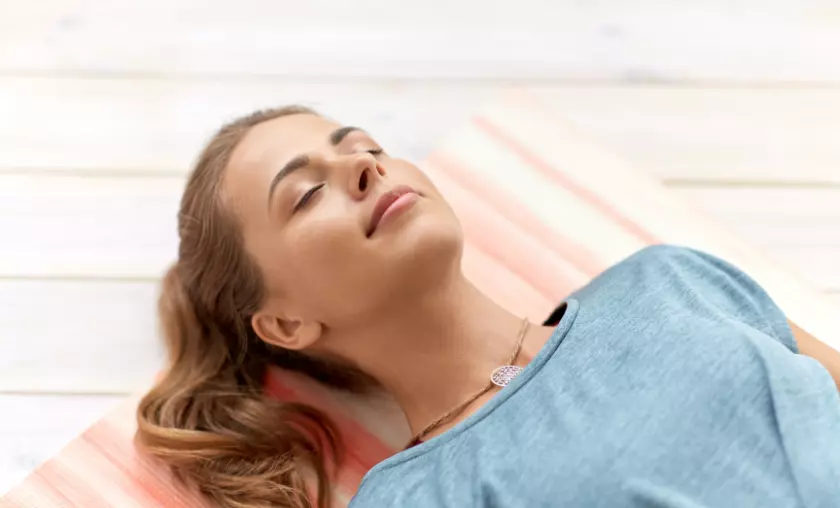
Corpse Pose is not just a time to rest after a sequence of poses; it’s a time to integrate and absorb the benefits of your practice. As you lie down, your body can recalibrate, and your mind can settle into a state of peacefulness. This integration phase is crucial for allowing the physical, mental, and emotional shifts you’ve experienced during your practice to become a part of you.
One of the most profound effects of Savasana is its ability to reduce Stress and anxiety. As you let go of tension in your body, you’re signaling to your nervous system that it’s safe to relax. This triggers the parasympathetic nervous system, responsible for the “rest and digest” response. By consciously relaxing in Corpse Pose, you’re promoting a state of calmness and rejuvenation.
But relaxation in Savasana extends beyond the physical realm. It’s an opportunity to quiet the mental chatter that often fills our minds. As you lay still, you may notice thoughts arising – plans, worries, memories. The practice is to acknowledge these thoughts without judgment and gently guide your focus back to your breath or the sensation of your body resting on the mat.
To practice Corpse Pose:
As you rest in Savasana, my fellow seekers, remember that complete surrender is a nurturing gift you give to yourself. It’s an act of self-care that replenishes your energy and restores your equilibrium. Corpse Pose is a gentle reminder that you deserve moments of stillness and relaxation in a world that often glorifies busyness.
As you embrace Savasana’s tranquility, let the surrender sensation wash over you. Feel the support of the earth beneath you, allowing it to hold you with tenderness. Let your breath be a soothing lullaby, carrying you more profoundly into calmness. Release the need to control or do and be.
Conclusion
Incorporating these 10 easy yoga poses into your wellness journey as a beginner can genuinely transform your mind and body. Each posture offers unique benefits, from Mountain Pose’s stability to Child Pose’s soothing surrender. Downward-Facing Dog helps release tension, while Cobra Pose opens the heart. Warrior I builds strength and focus, while Tree Pose symbolizes growth.
Bridge Pose bridges the gap between power and relief, and Cat-Cow Stretch enhances flexibility. Seated Forward Bend promotes introspection, while Corpse Pose wraps it up with profound relaxation. By embracing these poses, you embark on a journey that nurtures your Balance, strength, and inner serenity. Your wellness odyssey through yoga has just begun, promising a harmonious fusion of mind, body, and spirit.
FAQs
Do I need any special equipment to practice these poses?
No, you don’t need any fancy equipment. A comfortable, non-slip yoga mat is helpful, and wearing stretchy, comfortable clothing will enhance your experience. These poses use your body’s natural movements and postures, so minimal gear is required.
How often should I practice these poses?
Consistency is key. Aim for a regular practice, starting with a few times a week. As a beginner, it’s important to listen to your body. Gradually increase the frequency and duration as you become more comfortable with the poses.
I’m not flexible at all. Can I still do these poses?
Absolutely! These poses are designed for beginners, so flexibility isn’t a prerequisite. Yoga is about progress, not perfection. You’ll notice improved flexibility and comfort in the poses with time and practice.
Can these poses help with Stress and relaxation?
Many of these poses, like Child’s Pose and Corpse Pose, are profoundly relaxing and can help alleviate Stress. The mindful breathing and gentle stretches incorporated into these poses promote a sense of calm and tranquility.
I have a bad back. Can I still try these poses?
Always prioritize your safety and comfort. If you have a pre-existing condition like a bad back, it’s a good idea to consult a healthcare professional or a qualified yoga instructor before starting. They can guide you on modifications and adjustments to ensure you practice safely.
To read more similar articles, click here
Thanks for visiting our Website. If you appreciate our work, kindly show us some support in our comments section 🙂