Top 8 Best Exercises For a Toned and Defined Chest (April 2026)
87 Views
SaveSavedRemoved0
Sculpting a well-defined chest is a goal for many fitness enthusiasts, whether it’s to enhance aesthetics, improve strength, or boost overall confidence. Building a chiseled chest requires a combination of targeted exercises, proper technique, and consistency in training. In this guide, we’ll explore the top 8 best exercises for achieving a toned and defined chest, along with tips on how to incorporate them into your workout routine effectively.
Top 8 Best Exercises For a Toned and Defined Chest
1
Barbell Bench Press
The Foundation of Chest Development
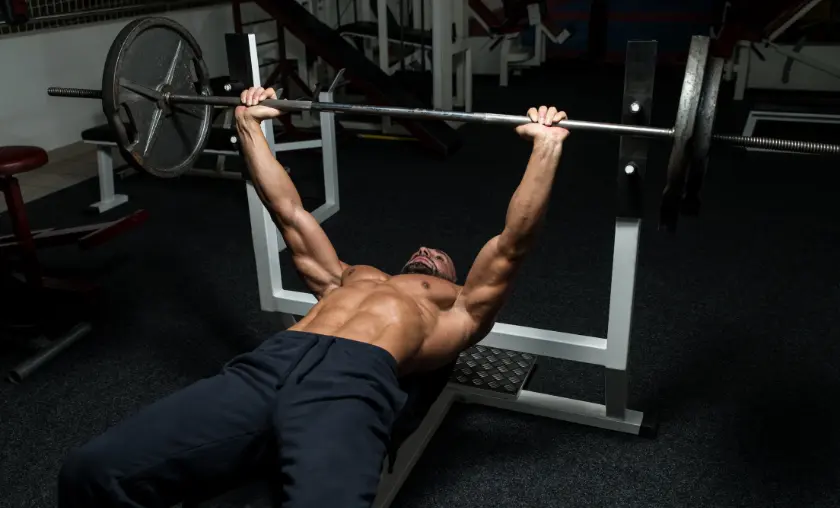
The barbell bench press is the cornerstone of any chest-focused workout routine. It primarily targets the pectoralis major, the largest muscle in the chest, while also engaging the anterior deltoids and triceps. This compound movement allows you to lift heavy weights and build both strength and size in the chest muscles. To perform the barbell bench press:
Lie flat on a bench with your feet firmly planted on the ground for stability.
Grip the barbell with hands slightly wider than shoulder-width apart, ensuring your wrists are in line with your elbows.
Lower the barbell towards your chest in a controlled manner, keeping your elbows at approximately a 45-degree angle to your body.
Press the barbell explosively back up to the starting position, fully extending your arms without locking out your elbows.
Proper form is essential when performing the bench press to prevent injury and maximize muscle activation. Maintain a stable grip on the barbell, keep your back flat against the bench, and avoid arching excessively. Gradually increase the weight as you become stronger, but never sacrifice form for heavier loads.
Dumbbell flyes are an isolation exercise that effectively targets the chest muscles while minimizing the involvement of other muscle groups. This movement provides a deep stretch at the bottom of the movement, followed by a strong contraction in the chest muscles. Dumbbell flyes are particularly effective for enhancing muscle definition and creating separation between the pecs. To perform dumbbell flyes:
Lie flat on a bench with a dumbbell in each hand, palms facing inward.
Extend your arms above your chest, slightly bending your elbows and maintaining a slight bend throughout the movement.
Lower the dumbbells out to the sides in a wide arc, feeling a stretch in your chest.
Bring the dumbbells back together over your chest, focusing on squeezing the chest muscles at the top of the movement.
Control the weight throughout the exercise to avoid swinging or using momentum to lift the dumbbells. Focus on maintaining tension in the chest muscles and avoid locking out your elbows at the top of the movement.
The incline dumbbell press targets the upper portion of the chest, helping to develop a well-rounded chest profile. By adjusting the bench to a 30-45 degree incline, you shift the emphasis to the clavicular head of the pectoralis major, enhancing upper chest development. Incline dumbbell presses also engage the anterior deltoids and triceps to a lesser extent. To perform incline dumbbell presses:
Set an incline bench to a 30-45 degree angle and sit back against it with a dumbbell in each hand.
Press the dumbbells upward until your arms are fully extended, with palms facing forward.
Lower the dumbbells down to chest level, allowing your elbows to flare out slightly.
Press the dumbbells back up to the starting position, focusing on squeezing the upper chest muscles at the top.
Maintain control throughout the movement, and avoid bouncing the weights off your chest to prevent injury. Choose an appropriate weight that allows you to perform the exercise with proper form and complete the desired number of repetitions.
Cable crossovers are an effective exercise for targeting the inner and outer portions of the chest muscles, promoting muscle balance and definition. This exercise provides constant tension on the chest throughout the movement, ensuring maximum muscle activation. Cable crossovers can be performed from various angles to target different areas of the chest. To perform cable crossovers:
Set the pulleys on a cable machine to the highest position and attach D-handles.
Stand in the center of the cable machine with one foot in front of the other for stability.
Grasp the handles with an overhand grip, palms facing downward, and slightly bend your elbows.
Bring your hands together in front of your body in a hugging motion, focusing on squeezing your chest.
Return to the starting position under control, maintaining tension in your chest muscles throughout the movement.
Adjust the cable height and hand position to target specific areas of the chest, such as the upper, middle, or lower chest. Keep your core engaged and avoid leaning excessively during the exercise to maintain proper form.
Push-ups are a fundamental bodyweight exercise that effectively targets the chest, shoulders, and triceps. This exercise can be modified to suit different fitness levels and provides a challenging yet effective way to strengthen and define the chest muscles. Push-ups also engage the core for stability, making them a compound movement that recruits multiple muscle groups. To perform push-ups:
Start in a plank position with your hands slightly wider than shoulder-width apart, arms fully extended, and body in a straight line from head to heels.
Lower your body towards the ground by bending your elbows, keeping them close to your sides.
Once your chest nearly touches the ground, push through your palms to extend your arms and return to the starting position.
Repeat for the desired number of repetitions, focusing on maintaining proper form and tension in your chest muscles.
Push-ups can be performed on your knees or with your hands elevated to make them easier, or with added resistance such as a weighted vest to increase the difficulty. Focus on controlling the movement and maintaining a straight line from head to heels throughout the exercise.
Chest dips are an advanced bodyweight exercise that targets the lower portion of the chest muscles, along with the triceps and shoulders. By leaning forward slightly during the movement, you can increase the emphasis on the chest for greater muscle activation. Chest dips require upper body strength and stability, making them an excellent exercise for building functional strength and muscle definition. To perform chest dips:
Stand between parallel bars and grasp the handles with an overhand grip.
Lift yourself up so that your arms are fully extended, elbows slightly bent, and feet off the ground.
Lean forward slightly and lower your body by bending your elbows until your chest dips below your hands.
Press through your palms to extend your arms and return to the starting position, focusing on squeezing your chest at the top.
Chest dips can be challenging, so it’s essential to focus on proper form and control the movement throughout the exercise. Avoid swinging or using momentum to lift your body, and maintain tension in your chest muscles at all times.
The decline bench press is a variation of the traditional bench press that targets the lower portion of the chest muscles. By performing the exercise on a decline bench, you increase the range of motion and engage more of the lower chest fibers. Decline bench press also places less stress on the shoulders compared to flat or incline bench press variations. To perform decline bench press:
Set up on a decline bench with your feet securely locked in place and lie back with a barbell above your chest.
Grip the barbell slightly wider than shoulder-width apart and unrack it, extending your arms fully.
Lower the barbell to your lower chest in a controlled manner, keeping your elbows tucked close to your sides.
Press the barbell back up to the starting position, fully extending your arms and squeezing your chest at the top.
Choose an appropriate decline angle that allows you to maintain stability and control throughout the movement. Avoid arching your back excessively or lifting too heavy of a weight that compromises your form.
Machine chest press is a popular exercise for beginners or those looking to isolate the chest muscles without the need for stabilization. This exercise provides a controlled movement pattern, allowing you to focus on contracting the chest muscles throughout the range of motion. Machine chest press machines typically have adjustable seats and handles to accommodate different body sizes and preferences. To perform machine chest press:
Sit on the machine with your back flat against the pad and adjust the seat height so that the handles are at chest level.
Grasp the handles with an overhand grip and push them forward until your arms are fully extended.
Slowly bring the handles back towards your chest, allowing your elbows to bend naturally.
Press the handles back out to the starting position, focusing on squeezing your chest at the top of the movement.
Machine chest press machines often have a predetermined range of motion, so focus on maintaining proper form and controlling the weight throughout the exercise. Adjust the seat position and handle height to ensure optimal muscle activation and comfort during the movement.
Building a toned and defined chest requires a combination of targeted exercises, proper nutrition, and adequate rest and recovery. By incorporating the top 8 best exercises for a toned and defined chest into your workout routine, you can effectively target all areas of the chest muscles for optimal growth and development. Whether you prefer free weights, machines, or bodyweight exercises, there are plenty of options to suit your preferences and goals. Remember to focus on proper form, progressive overload, and adequate rest and recovery to maximize your results and unlock your chest’s full potential.
FAQs
Are there any specific dietary recommendations for chest development?
While there are no specific dietary guidelines exclusively for chest development, maintaining a balanced diet rich in protein, healthy fats, and carbohydrates can support muscle growth and recovery. Ensure you’re consuming enough calories to support your training goals, and consider incorporating foods high in nutrients such as lean meats, fish, eggs, dairy, fruits, vegetables, and whole grains. Additionally, staying hydrated and consuming an adequate amount of water throughout the day is crucial for optimal performance and muscle function.
How can I prevent injury while performing chest exercises?
To minimize the risk of injury during chest exercises, it’s essential to prioritize proper form, warm-up adequately before each workout, and gradually increase the intensity and volume of your training over time. Pay attention to any discomfort or pain during exercises and avoid pushing through it, as this may indicate an underlying issue. Incorporating a variety of exercises that target different angles and muscle groups can also help prevent overuse injuries and promote balanced muscle development. If you’re unsure about proper technique or have a history of injuries, consider working with a certified personal trainer or fitness professional to ensure safe and effective workouts.
Can I perform chest exercises if I have existing shoulder or chest injuries?
If you have existing shoulder or chest injuries, it’s essential to consult with a healthcare professional or physical therapist before performing chest exercises. Depending on the nature and severity of your injury, certain exercises may need to be modified or avoided altogether to prevent exacerbating the condition. In some cases, incorporating rehabilitation exercises and focusing on strengthening the surrounding muscles may be necessary before gradually reintroducing chest exercises into your routine. Always prioritize safety and listen to your body, and never push through pain or discomfort during workouts.
Should I incorporate cardio into my chest workout routine?
While cardiovascular exercise is essential for overall health and fitness, it’s generally not necessary to incorporate cardio directly into your chest workout routine. Instead, consider adding cardio sessions on separate days or at different times of the day to avoid fatigue that may interfere with your strength training. However, if you enjoy combining cardio and strength training, consider incorporating exercises such as burpees, mountain climbers, or plyometric push-ups into your chest workouts to elevate your heart rate and enhance calorie burn. Experiment with different training strategies to find what works best for your goals and preferences.
Should I focus on lifting heavy weights or higher repetitions for chest development?
Both heavy lifting and higher repetitions have their place in a well-rounded chest development routine. Lifting heavy weights with lower repetitions (e.g., 4-6 reps) can help build strength and stimulate muscle growth by recruiting high-threshold muscle fibers. On the other hand, higher repetitions (e.g., 8-12 reps) with moderate weights are effective for inducing muscle hypertrophy and promoting muscular endurance. Incorporating a combination of both heavy and moderate rep ranges into your chest workouts can provide a comprehensive stimulus for muscle growth and strength development. Experiment with different training protocols and adjust based on your individual goals and preferences.

![Top 8 Best Exercises For a Toned and Defined Chest ([wpsm_custom_meta type=date field=month] [wpsm_custom_meta type=date field=year]) - The Complete Portal](https://thecompleteportal.com/wp-content/uploads/2024/03/Dumbbell-Flyes.webp)
![Top 8 Best Exercises For a Toned and Defined Chest ([wpsm_custom_meta type=date field=month] [wpsm_custom_meta type=date field=year]) - The Complete Portal](https://thecompleteportal.com/wp-content/uploads/2024/03/Incline-Dumbbell-Press-1.webp)
![Top 8 Best Exercises For a Toned and Defined Chest ([wpsm_custom_meta type=date field=month] [wpsm_custom_meta type=date field=year]) - The Complete Portal](https://thecompleteportal.com/wp-content/uploads/2024/03/Cable-Crossovers.webp)
![Top 8 Best Exercises For a Toned and Defined Chest ([wpsm_custom_meta type=date field=month] [wpsm_custom_meta type=date field=year]) - The Complete Portal](https://thecompleteportal.com/wp-content/uploads/2024/03/Push-Ups.webp)
![Top 8 Best Exercises For a Toned and Defined Chest ([wpsm_custom_meta type=date field=month] [wpsm_custom_meta type=date field=year]) - The Complete Portal](https://thecompleteportal.com/wp-content/uploads/2024/03/Chest-Dips.webp)
![Top 8 Best Exercises For a Toned and Defined Chest ([wpsm_custom_meta type=date field=month] [wpsm_custom_meta type=date field=year]) - The Complete Portal](https://thecompleteportal.com/wp-content/uploads/2024/03/Decline-Bench-Press.webp)
![Top 8 Best Exercises For a Toned and Defined Chest ([wpsm_custom_meta type=date field=month] [wpsm_custom_meta type=date field=year]) - The Complete Portal](https://thecompleteportal.com/wp-content/uploads/2024/03/Machine-Chest-Press.webp)